
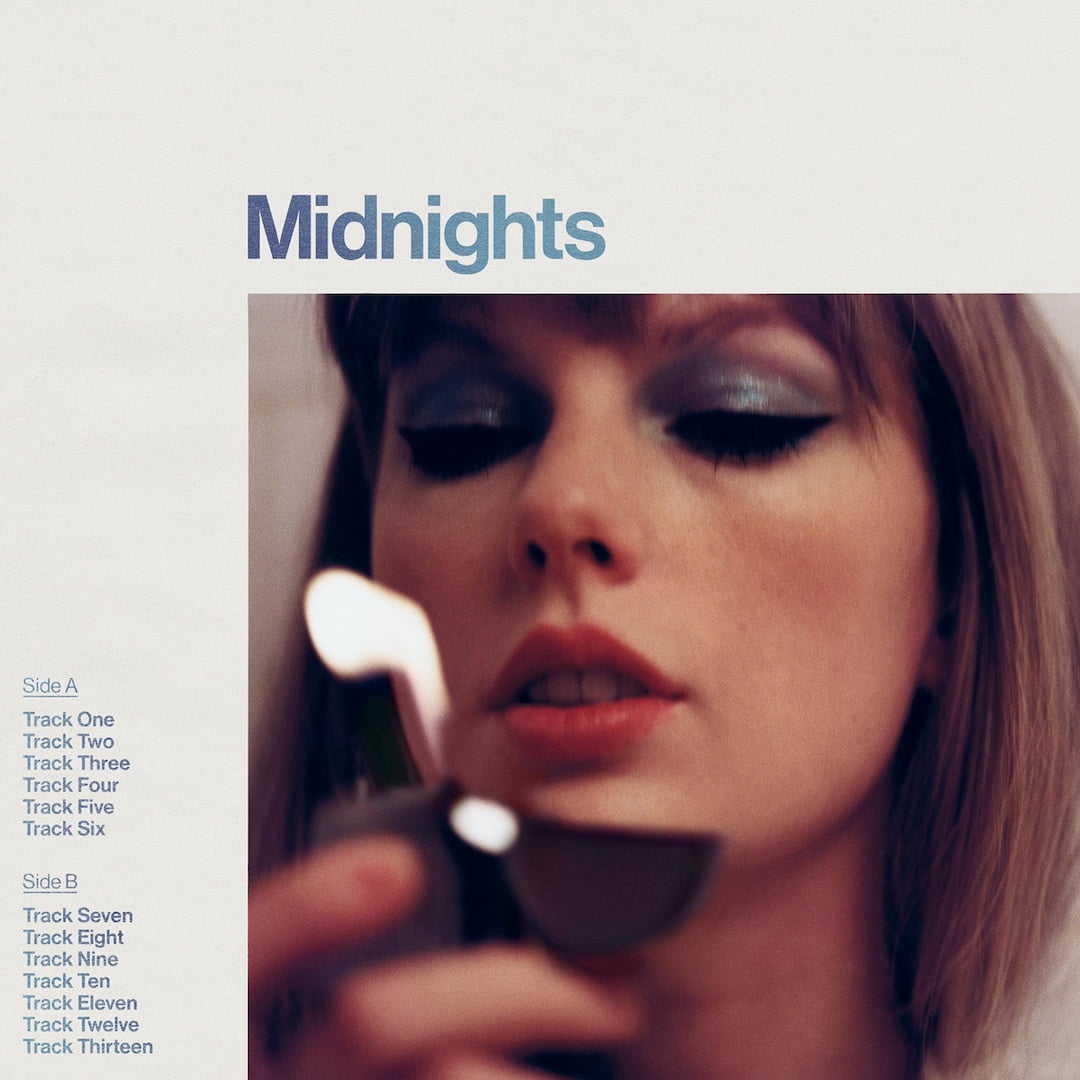

Taylor Swift’s Midnights is a concept album built around the thoughts, memories and emotions that can surface when the world goes quiet. Released on October 21, 2022, it was introduced as a collection inspired by 13 sleepless nights from different points in Swift’s life. Its songs move between romance, insecurity, regret, ambition and self-reflection, while recurring images and references invite listeners to connect the album with moments from her wider catalogue.
This guide explores the standard 13-track album and the seven additional songs released on Midnights (3am Edition). It separates details Swift has explained publicly from interpretations that listeners have developed. That distinction matters: not every fan theory is a confirmed Easter egg, and some songs can support more than one reading.
What Is Taylor Swift’s Midnights About?
Midnights is Swift’s tenth studio album. Rather than telling one continuous story, it revisits different emotional moments across her life. The late-night setting gives the record a shared atmosphere: private thoughts become louder, old decisions return to mind, and feelings that are easier to ignore during the day come into focus.
The standard edition contains 13 songs and runs for approximately 44 minutes. Swift released a surprise 3am Edition on the same date, adding seven more tracks for a 20-song collection. The extra songs are not simply remixes; they widen the album’s emotional range with stories about conflict, loss, memory and self-doubt.
Midnights Tracklist and the Stories Behind the Songs
These descriptions are listening guides, not official explanations of every lyric. Swift has discussed some inspirations, while other meanings remain open to interpretation.
Standard Edition: All 13 Tracks
1. Lavender Haze
The opening track takes its title from an expression Swift said she encountered while watching Mad Men. She connected the phrase with the dreamy feeling of being in love and wanting to protect a relationship from outside judgement. The song questions the pressure to define a relationship according to public expectations. Zoë Kravitz is among its credited co-writers, alongside Swift and the other songwriters listed in the album credits.
2. Maroon
Where the opener feels hazy and romantic, “Maroon” looks back at a relationship through darker shades of red. Its colour imagery suggests how a memory can deepen and change over time. Fans often compare its emotional palette with the red imagery found elsewhere in Swift’s catalogue, but a direct connection to a particular earlier song should be treated as interpretation rather than confirmed fact.
3. Anti-Hero
“Anti-Hero” is one of the album’s most direct examinations of insecurity. Swift has described it as a song about her own struggles and the parts of herself she finds difficult to face. Its self-aware tone, uncomfortable humour and surreal video imagery make it a central key to the album’s themes of self-criticism and public scrutiny.
4. Snow on the Beach
Featuring Lana Del Rey, this track describes the unusual feeling of discovering that romantic feelings may be mutual. The image of snow falling on a beach captures something beautiful precisely because it seems unlikely. The original album credits Del Rey as a featured artist, while the song’s writing credits also recognise her contribution.
5. You’re on Your Own, Kid
This song traces ambition, loneliness and personal growth. Its memories of wanting recognition and belonging gradually turn into a message about resilience and self-reliance. Many listeners hear it as a retrospective look at the sacrifices involved in pursuing a dream.
6. Midnight Rain
“Midnight Rain” contrasts two people who wanted different futures. Its production shifts between vocal textures, reinforcing the distance between the perspectives in the story. The song can be read as a reflection on choosing personal ambition even when that choice changes a relationship.
7. Question…?
Built around questions and recollection, this track revisits an emotionally complicated encounter. Listeners have connected its references and phrasing with earlier Swift songs and public moments, but those connections are theories unless Swift has confirmed them. Its uncertainty is part of the song’s design.
8. Vigilante Shit
This is one of the album’s darker, more theatrical tracks. It adopts the voice of someone responding to betrayal and seeking a form of payback. Rather than presenting a detailed real-life account, the song works as a stylised revenge narrative.
9. Bejeweled
“Bejeweled” uses the image of shining gemstones to explore confidence and the need to be appreciated. The narrator recognises that she should not have to make herself smaller to keep someone else comfortable. The music video adds a fairy-tale setting and visual details that encourage close viewing.
10. Labyrinth
“Labyrinth” captures the disorientation of falling in love again after being hurt. Its production mirrors the feeling of losing control, then slowly finding a way through uncertainty. It offers a quieter, more vulnerable contrast to the album’s bolder songs.
11. Karma
In “Karma”, Swift presents karma as a force that brings balance and consequences. The song’s playful confidence made it a major topic of fan discussion, especially because the word had appeared in earlier fan theories about her music. Those older theories are part of the song’s reception, not proof of a hidden album announcement.
12. Sweet Nothing
This gentle track focuses on the comfort of a relationship that does not demand performance or achievement. Its domestic details offer a peaceful counterpoint to the noise of fame and public life. The songwriting credits include William Bowery, the pseudonym Swift has used for Joe Alwyn.
13. Mastermind
The closing song looks at planning, attraction and the desire to shape how a relationship begins. Its narrator admits to being more deliberate than the other person may have realised. As an ending, it complicates the album’s recurring questions about fate, choice and control.
Midnights (3am Edition): The Seven Extra Songs
The surprise 3am release expanded the album from 13 to 20 tracks. Swift described these additions as songs written during the process of finding the original collection. They offer more perspectives on the album’s late-night themes.
14. The Great War
A relationship is compared with a battle, with conflict, mistrust and reconciliation shaping the song’s imagery. The war metaphor makes emotional damage feel large, but the story also considers what it takes to repair trust.
15. Bigger Than the Whole Sky
This is a grief-filled song about an absence that leaves a lasting mark. Swift has not assigned one definitive public explanation to every detail, so it is best approached as a broad meditation on loss rather than tied to a specific event without evidence.
16. Paris
“Paris” uses the idea of a faraway city as a private romantic escape. Its central contrast is between the couple’s imagined world and the distractions happening around them. The location functions as a mood and symbol as much as a travel destination.
17. High Infidelity
The song explores betrayal, emotional distance and complicated choices. Its references to dates and past events have prompted fan theories, but listeners should distinguish those interpretations from a confirmed autobiographical account.
18. Glitch
“Glitch” describes a relationship that feels unexpected, almost like a disruption in the normal order of things. Digital language becomes a metaphor for attraction that was not planned but has become difficult to ignore.
19. Would’ve, Could’ve, Should’ve
This intense track looks back at a formative relationship with anger and regret. It explores how an experience can continue to affect someone long after it has ended. Its emotional force comes from the narrator’s attempt to understand what was lost and what cannot be recovered.
20. Dear Reader
The final track speaks directly to the listener and questions the idea that an artist should always be treated as a guide. Its reflective tone makes it a fitting ending to an album about private thoughts, imperfect decisions and the gap between public image and personal experience.
Important Midnights Easter Eggs and Hidden Connections
Swift’s music videos, social posts, album artwork and earlier songs have encouraged fans to look for recurring colours, numbers, objects and phrases. Some details are confirmed by Swift; others are thoughtful fan interpretations. The following are useful connections to explore without presenting every theory as fact.
The 13 sleepless nights
The number 13 is closely associated with Swift and is built into the album’s original concept. She introduced Midnights as stories from 13 sleepless nights across her life, and the standard edition contains 13 tracks. The 3am Edition then adds seven more songs, taking the expanded tracklist to 20.
Lavender and the 1950s expression
Swift publicly explained the inspiration behind “Lavender Haze”: the phrase describes the dreamy feeling of being in love, while the song addresses the pressure of public speculation. This is one of the clearest confirmed explanations connected to the album and a useful starting point for understanding its themes.
Recurring colours and visual clues
The album’s artwork and videos use midnight blue, purple, red and jewel-like imagery. Fans often compare these colours with visual motifs from earlier eras. Such comparisons can make for interesting discussion, but a colour match alone does not establish that a song is secretly about a particular person or album.
Connections to earlier songs
Listeners have noticed thematic echoes between “Maroon” and the red imagery of Red, between “Karma” and earlier uses of the word in Swift’s public and musical life, and between “Mastermind” and songs about fate or carefully planned romance. These are interpretive links rather than a confirmed track-by-track map of Swift’s discography.
The Bejeweled music video
The “Bejeweled” video uses a fairy-tale world, elaborate costumes and familiar storybook imagery. Its details reward repeat viewing, but individual objects and cameos should only be described as intentional clues when there is reliable confirmation. The broader message of reclaiming confidence is clear even without decoding every frame.
Who Worked on Midnights?
Swift is the central songwriter and performer on Midnights. Jack Antonoff is a major collaborator across the record, with additional songwriting and production contributions from several artists, including Sounwave, Jahaan Sweet, Keanu Beats and others on specific tracks. Lana Del Rey appears on “Snow on the Beach”, and Zoë Kravitz is among the co-writers of “Lavender Haze”. For exact credits, consult the credits for the specific edition and track rather than assuming every collaborator worked on the entire album.
Why Midnights Still Matters to Taylor Swift Fans
Midnights connects personal storytelling with polished pop production. Its songs revisit familiar Swift themes such as memory, love, public judgement and self-discovery, but the late-night concept gives them a shared frame. The expanded editions also show how a record can continue to develop after its first release, with bonus tracks adding new emotional perspectives.
For listeners exploring the album today, the most rewarding approach is to hear the songs first and then revisit the videos, credits and confirmed explanations. Fan theories can add another layer of enjoyment, as long as they are recognised as theories rather than facts.
Frequently Asked Questions
When was Taylor Swift’s Midnights released?
Midnights was released on October 21, 2022.
How many songs are on Midnights?
The standard edition has 13 tracks. The 3am Edition adds seven songs, bringing that version to 20 tracks.
What is the meaning of the Midnights album?
Swift introduced the album as a collection inspired by 13 sleepless nights from different points in her life. Its songs explore love, regret, insecurity, ambition, memory and self-reflection.
What does Lavender Haze mean?
Swift explained that “Lavender Haze” refers to the dreamy feeling of being in love. The song also explores the desire to protect a relationship from public judgement and outside pressure.
Is Lana Del Rey on Midnights?
Yes. Lana Del Rey is featured on “Snow on the Beach”, track four on the standard edition.
What are the seven 3am Edition songs?
They are “The Great War”, “Bigger Than the Whole Sky”, “Paris”, “High Infidelity”, “Glitch”, “Would’ve, Could’ve, Should’ve” and “Dear Reader”.
Are all Midnights Easter eggs confirmed by Taylor Swift?
No. Some inspirations and details have been explained publicly by Swift, while many connections discussed by fans remain interpretations. It is important to label theories clearly rather than present them as confirmed facts.